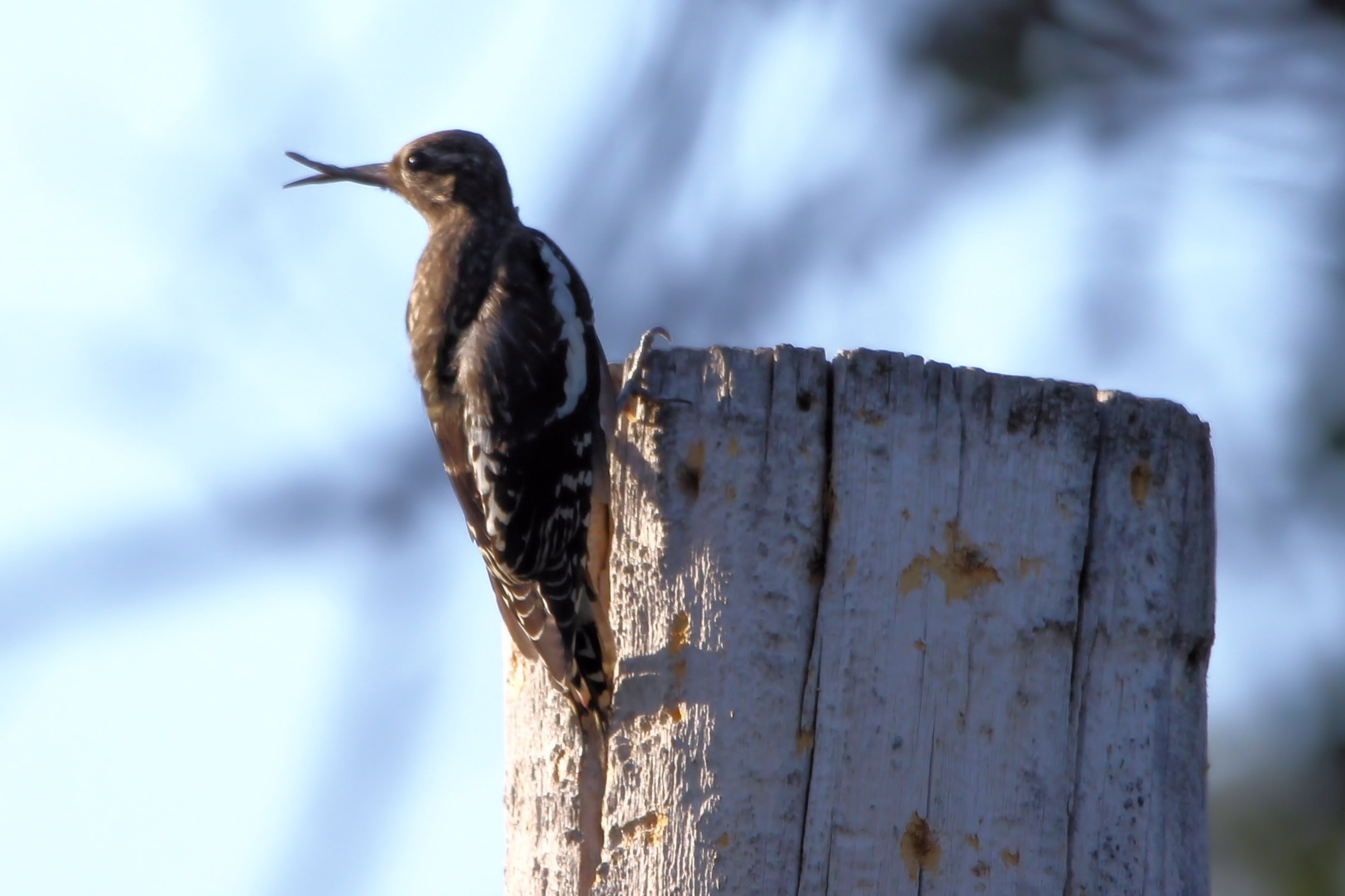
egular readers may recall the column about “Edwina Scissorbeak”, the Yellow-bellied Sapsucker impacted by Avian Keratin Disorder (AKD). Curious about this unusual deformity of the beak, we wondered if Edwina was a unique case, or if AKD would infect many species of birds.
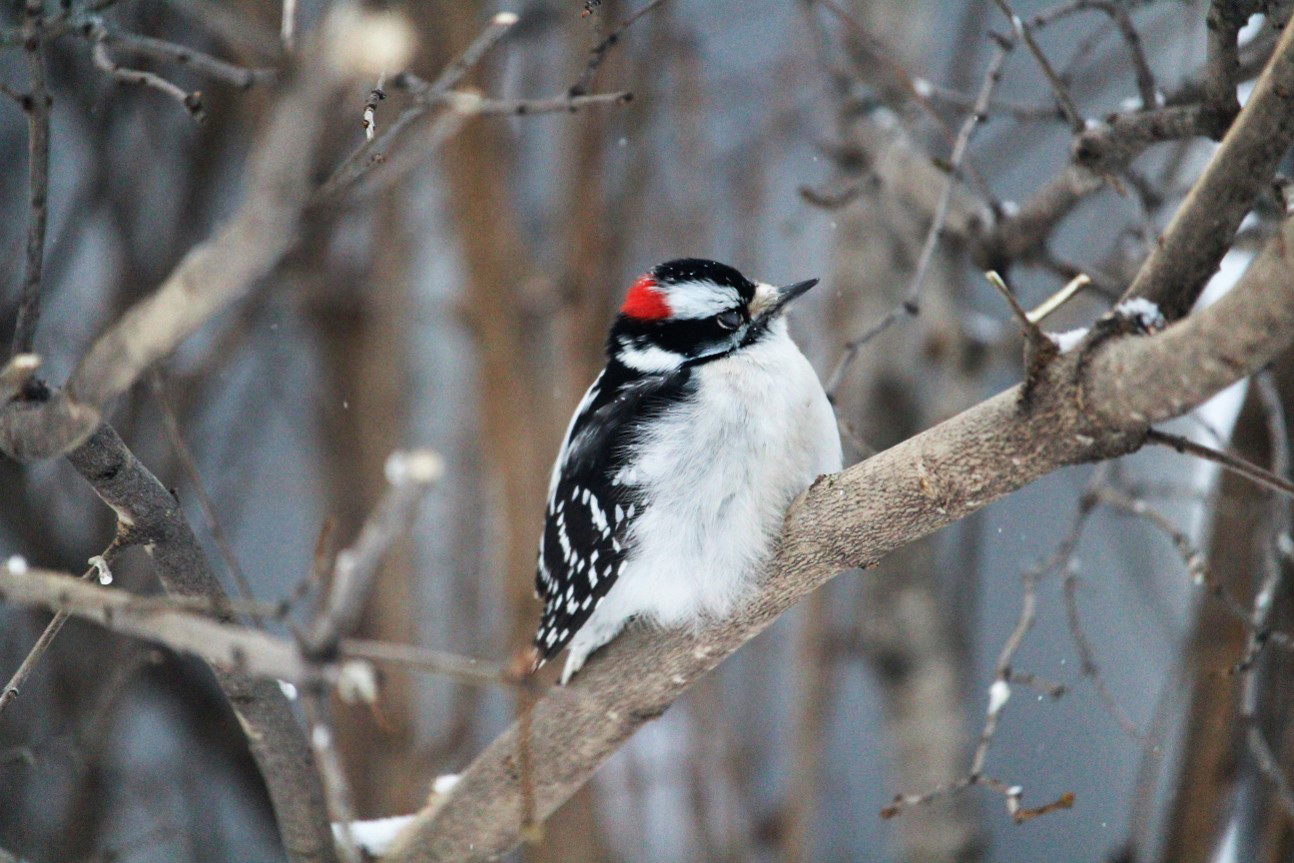
Identified in the late 1990s by Alaskans who reported large numbers of Black-capped Chickadees with beak deformities, the American scientific community took an interest in this phenomenon. The impact on birds affected by AKD were significant. Difficulty in feeding and preening contributed to higher rates of death of affected birds. Beginning in 1999, the research group has counted more than 3000 chickadees infected with AKD, the highest concentration of deformities ever recorded in a wild bird population. Crows, Downy Woodpeckers, Steller’s Jays, Red-breasted Nuthatches and Black-billed Magpies in Alaska have also been victims of AKD. Reports from across North America and Europe hint at an increasing spread of AKD. In fact more than 40 species of birds have been found with AKD deformities in North America. In the United Kingdom, over 30 species have been impacted.
Scientists working at the USA Geological Survey studying AKD, listed a number of factors as potential causes. Considered in the research were environmental contaminants, deficiencies in nutrition, disease, parasite infection, blunt trauma, such as hitting a window and genetic problems. After exploring those potential causes and ruling each out as direct link to AKD, tissue from the beaks of 28 infected chickadees became the focus of attention. Using next generation genetic sequencing technology in 2016, a new picornavirus which was named Poecivirus, was found to be present in the beak tissue. Looking to connect this virus as a direct cause, scientists found that 100% of the infected birds tested positive, having the virus present. The Poecivirus is a member of the family of viruses that is known to cause several illnesses in humans including polio, Hepatitis A and the common cold.
Aside from the key beak deformity, other physical things can also show the presence of AKD. Symptoms can include lesions and scaling on the skin, feet, legs and claws leading to unkempt feathers and the potential for other types of infections to impact the bird.
Bird watchers and scientists both are concerned about the expanding range and increasing number of species impacted by Avian Keratin Disorder. The conditions that lead to the creation of the Poecivirus have not been identified. Of interest as well as whether or not the virus is transmitted from bird to bird. With such a new virus in nature, scientists will no doubt which to discover the reasons for its existence. Edwina, you are not alone