Out on a mid-December leisurely birding adventure at Elliston Park in east Calgary, our goal was to photograph a few small birds including two chickadee species and an energetic kinglet. However, on this sunny morning, the trees were quiet, save the croak of a raven and the laugh of a magpie. Peering into the ice free end of the storm pond, we could see multiple mallards, three our four goldeneyes, a pair of scaups, a hooded merganser, and a northern shoveler.
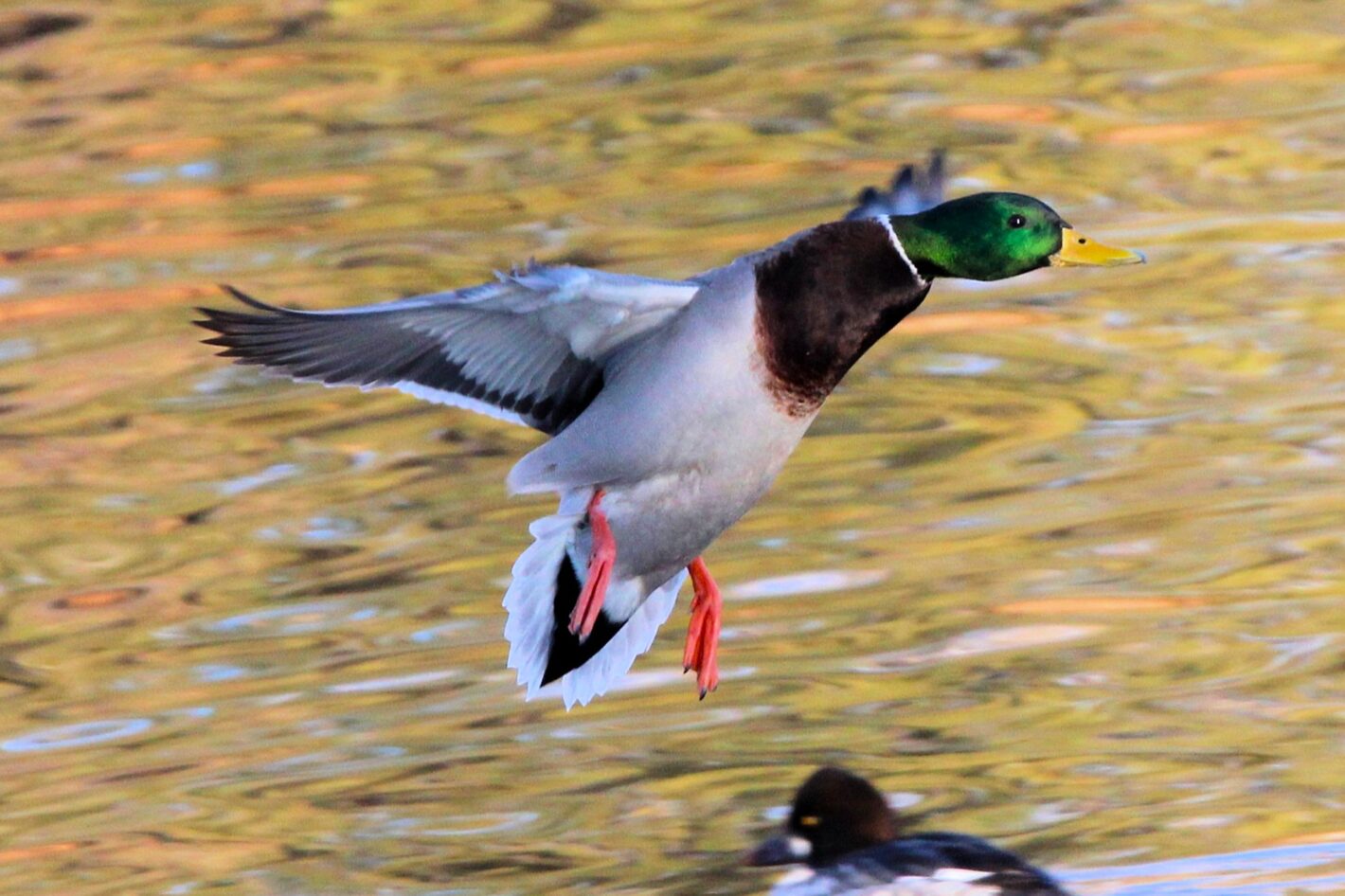
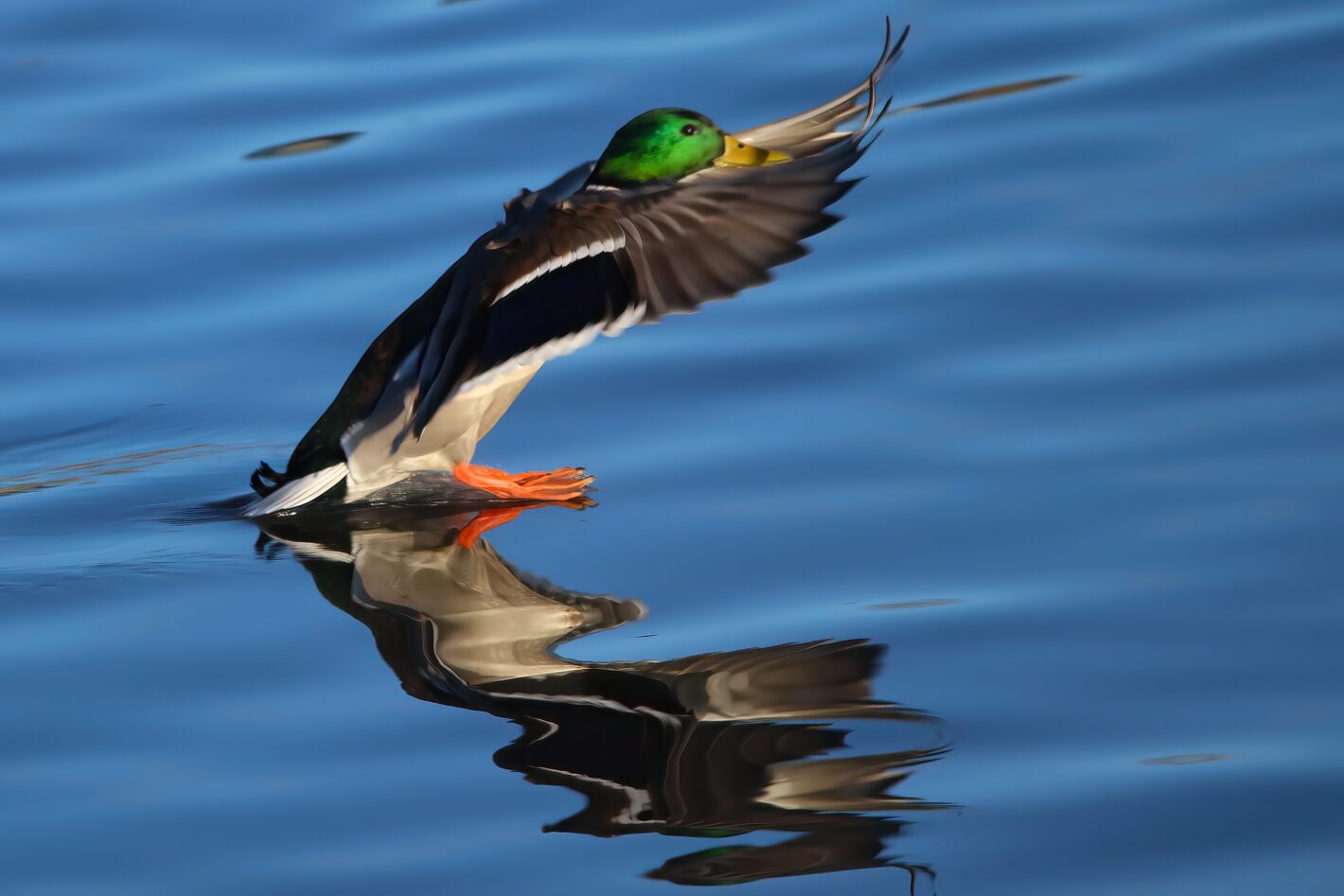
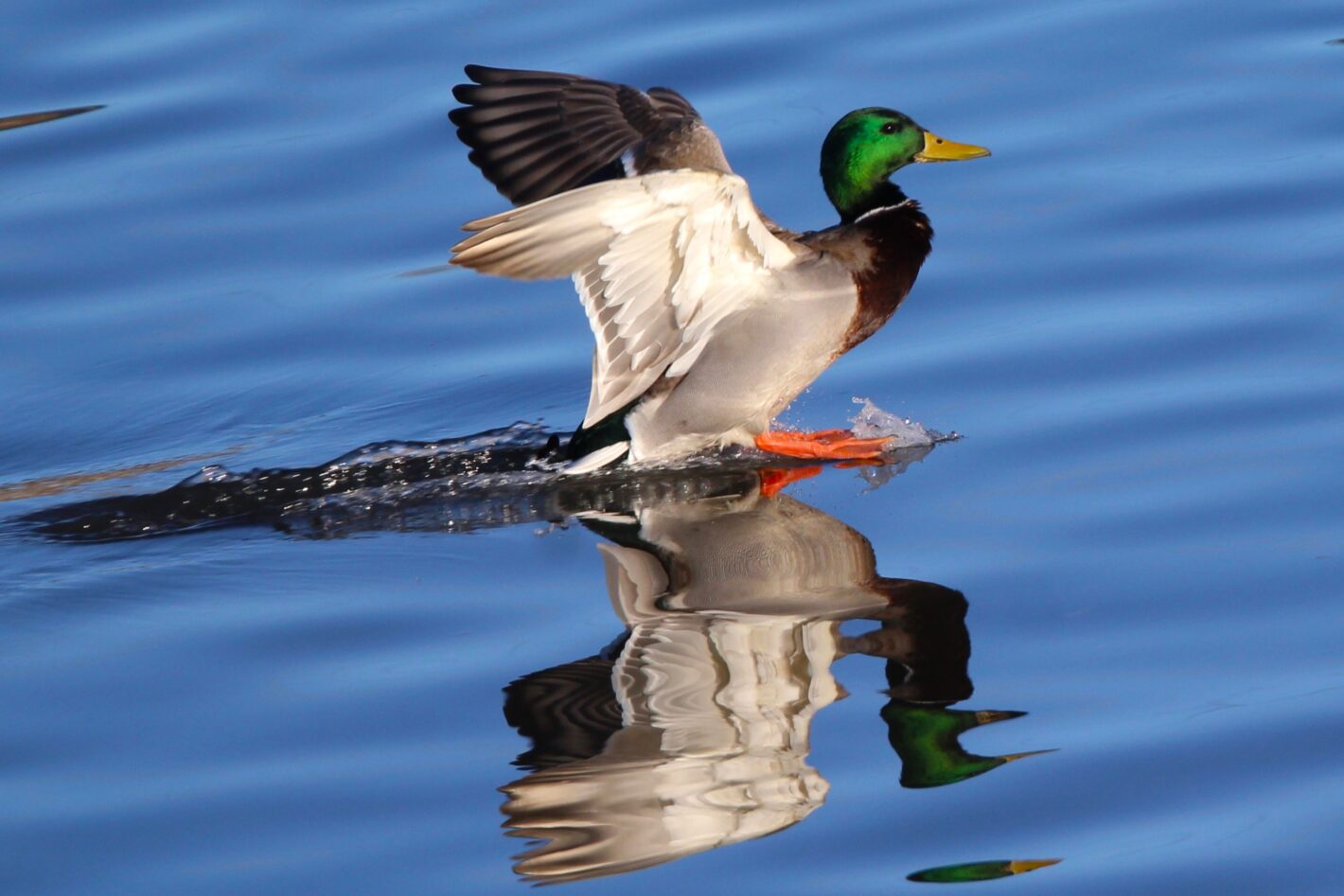
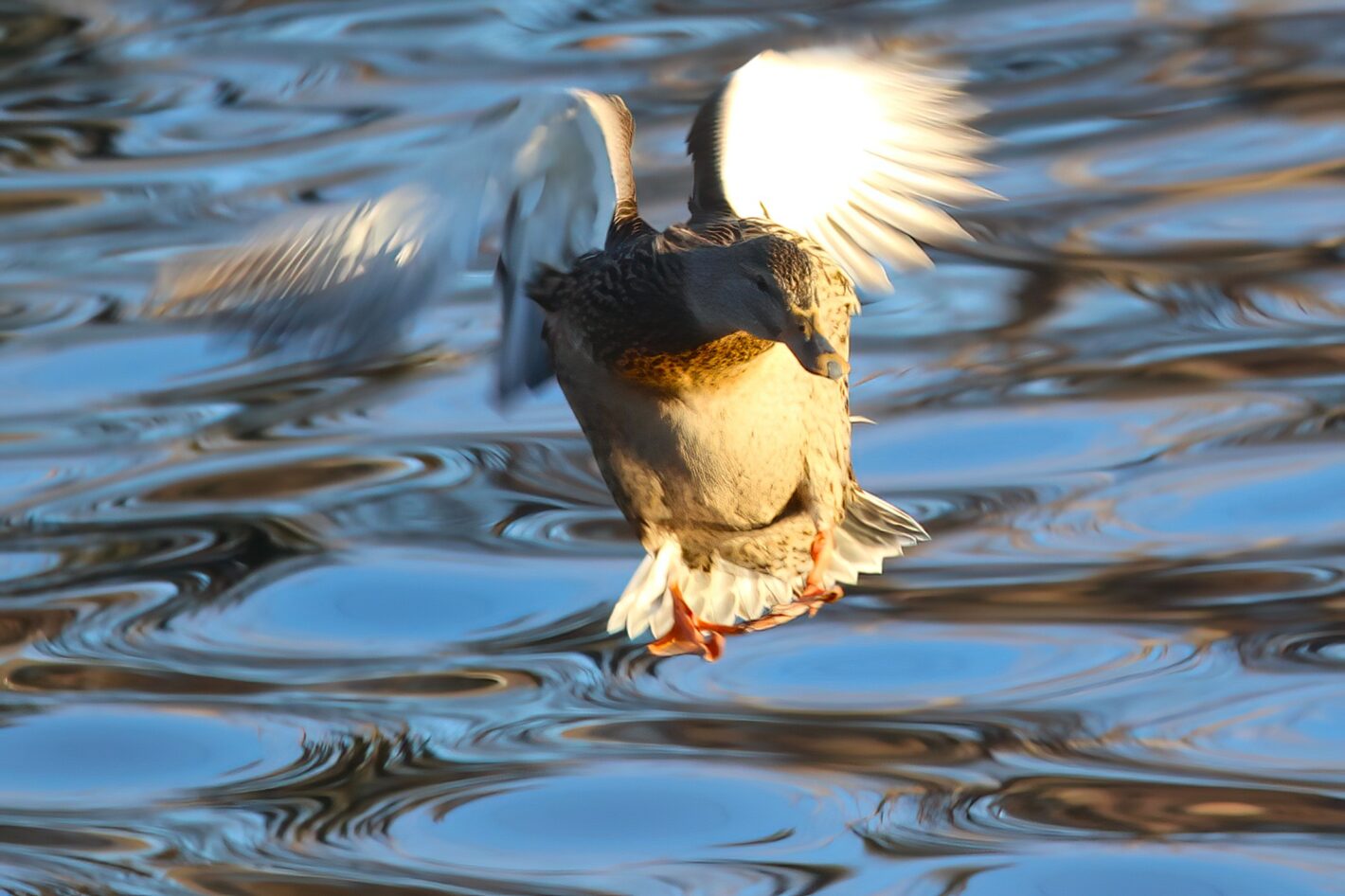
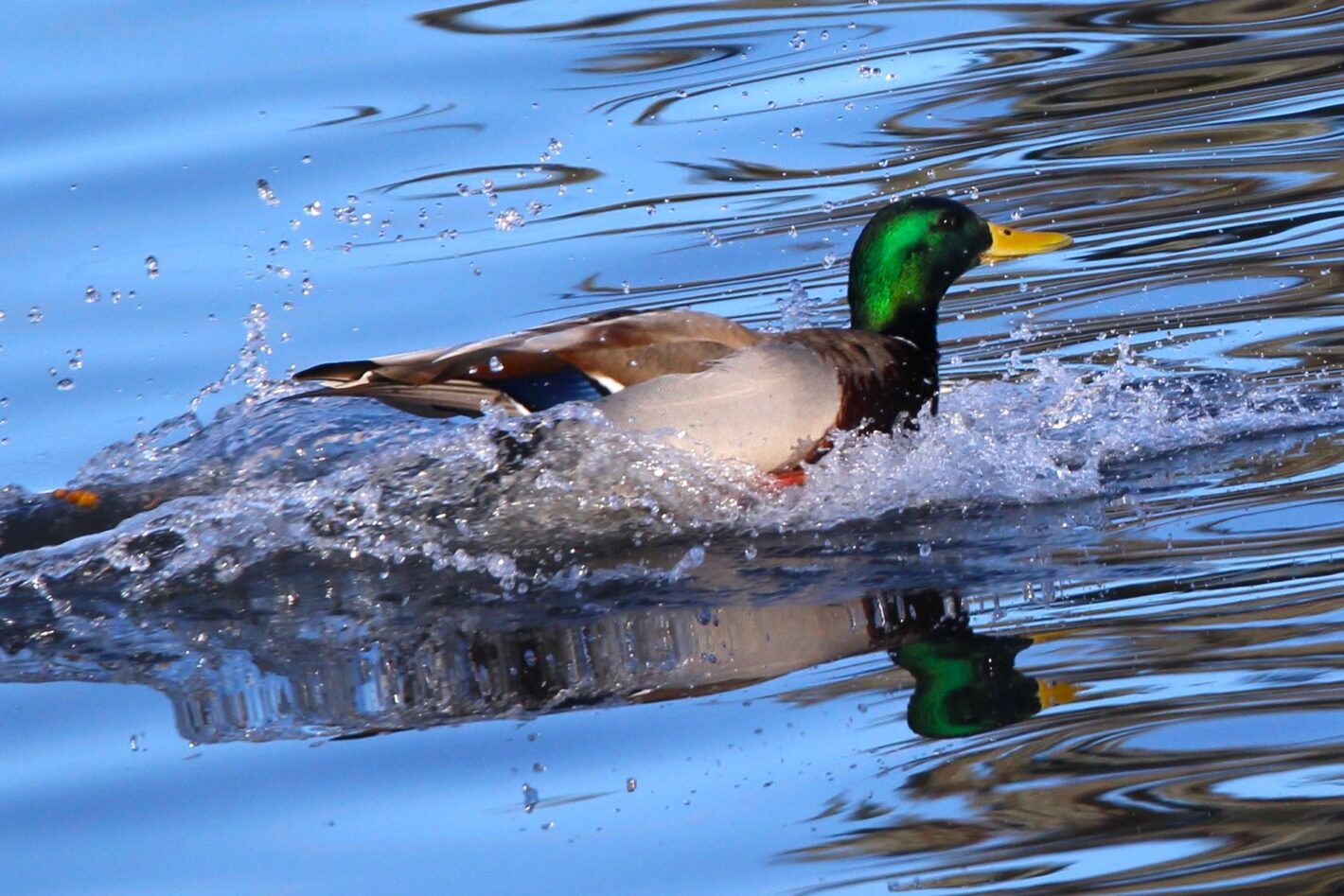
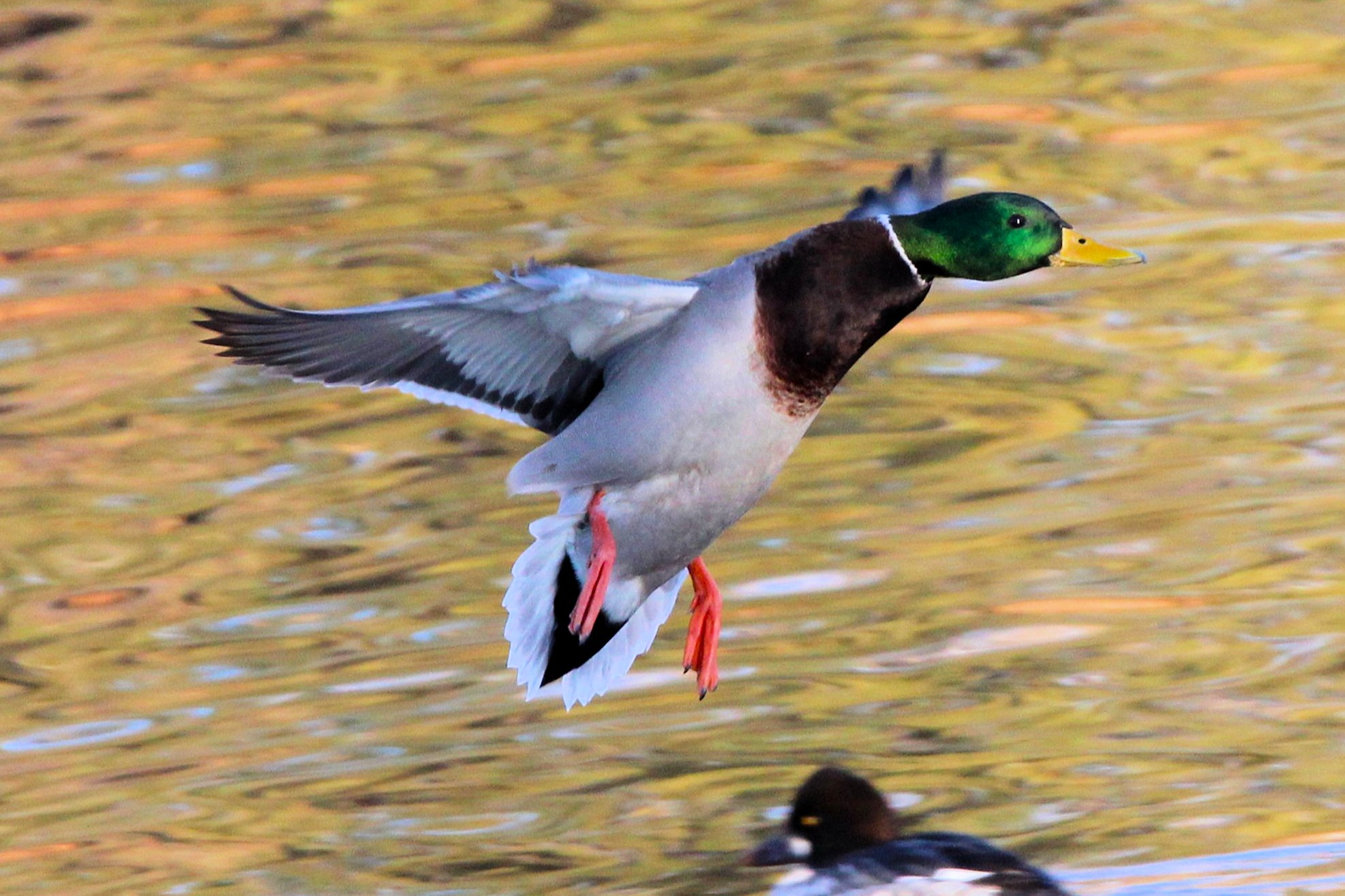
As we clicked our shutters, the mixed duck flock, maneuvered its way around, certainly wary of our presence. Above, more mallards were preparing for a rapid descent to land on the water and join fellow mallards. Landing individuals, in pairs or small groups, with sunlight illuminating each mallard, catching these ducks in the act of landing was a photographic opportunity. While cameras active, we wondered what Sheldon would say about the physics involved in mallard magic.
With wings flared out, landing gear down and webbed feet spread, these mallards increase drag to slow down their approach. Flaring the wings just prior to landing by tilting them back and down to act as “air brakes”, one can see the rear end of the duck become the centre of balance, Using its webbed feet to hit the water first, it’s interesting to note that a duck’s legs are set further back on the body, enabling it to extend the legs downward for contact. The magic moment occurs when the webbed feet act like a pair of skis, pushing water downward and backward. The mallard’s body cleaves the water, transferring all of its energy to create maximum drag, known in physics as hydrodynamic braking.
Rather than sinking like a stone, ducks have unique advantages to make sure they float after impact. Having hollow bones, air sacs and specialized oiled feathers to trap air, the change from flight to float is easy. Sheldon would probably add the fact that the Archimedes Principle applies in this situation, where water is displaced by the mallard’s body. The weight of the mallard displaces an amount of water which is equal in weight.
Joining our four duck species were a dozen or so Canada geese landing in the storm pond, implementing the same physics principles. Lots of wave making and splashing, followed by communing with fellow wildfowl makes a sunny morning in mid December, just ducky.