

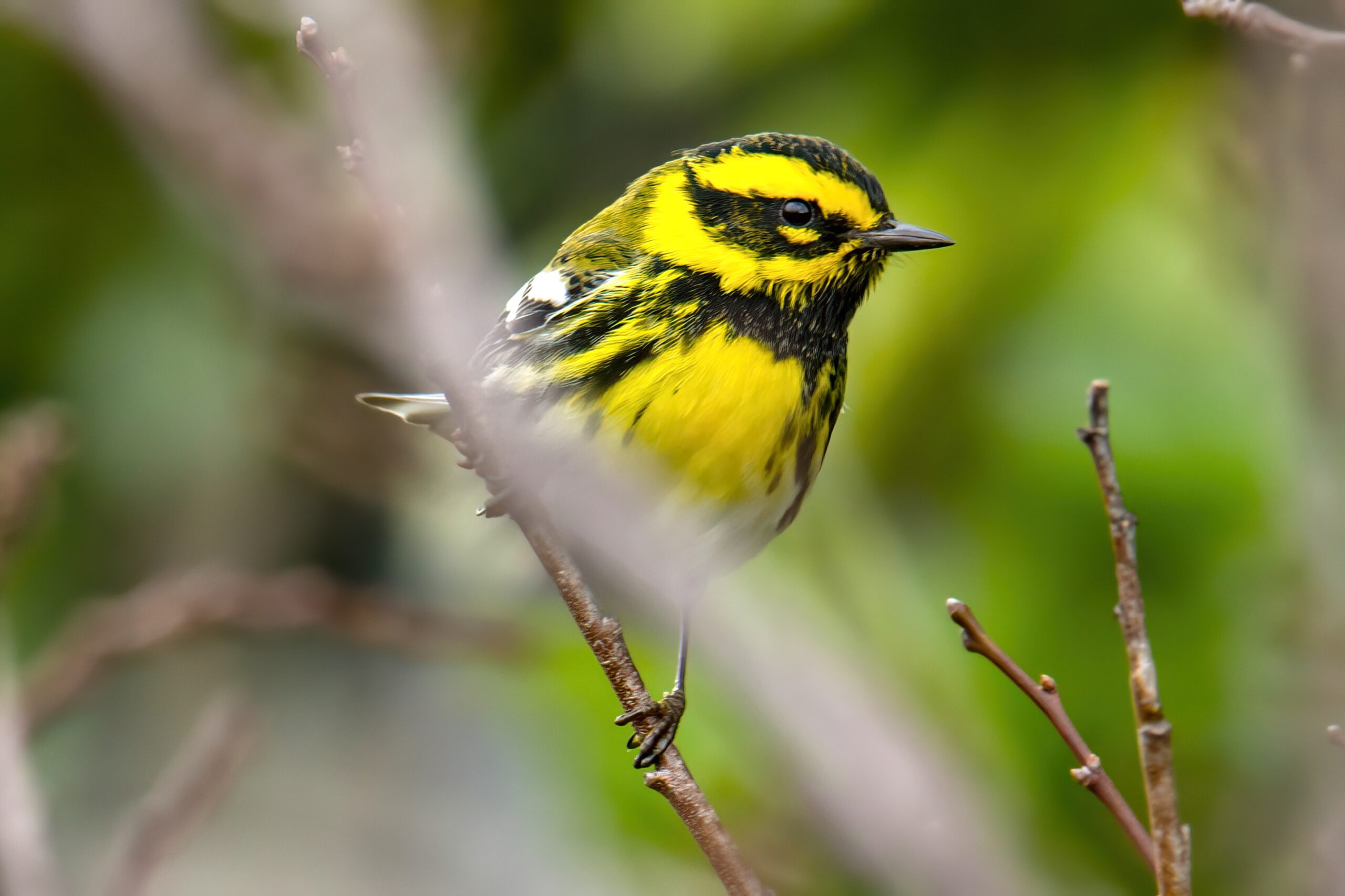
Over the past few months, Elaine and I have enjoyed brief walks in the wooded areas of Elliston Park. One specific bird of interest is a member of the thrush family, a family of birds that includes the American Robin. This grey-colored bird, almost the size of a robin, sports a white eye ring. Their melodic calls makes one wonder if the angels of heaven, are singing to the world through this solitary bird. “It’s a Townsend’s Solitaire”, Elaine whispers, while we take photographs. “I can’t believe Pete Townshend has a bird named after him”, I reply. “He doesn’t”. While smirking, I answer: “I know”.
One might indeed ask what is in a bird’s name? November 1st, 2023 is an important date in the history of naming birds. As a part of the larger social justice movement, the American Ornithological Society, (AOS) announced that it would change the names of any bird identified by the name of an individual, which was a common practice in the 18th and 19th centuries. Of the 152 North American species identified with human names, between 70 and 80 birds will be the starting point for the society. One may wonder why a significant change of this nature is needed.
One key reason is the less than honorable reputation, behavior and character of specific individuals. An example often referred to is Mr. John Kirk Townsend, after whom two species are named: The Townsend’s Solitaire and Townsend’s Warbler. Born in the city of brotherly love, Philadelphia, in 1809, and trained as a doctor and pharmacist, Townsend’s real interests led him to join an expedition to the Rocky Mountains in 1833. During this expedition Townsend collected six new bird species and a number of mammals. However, Townsend collected much more than birds and mammals. Samuel George Morton, a doctor and friend, had an intense interest in human skulls, using them to define all races by their shapes and sizes. Morton had a fascination in acquiring the skulls of Indigineous people of North America. Townsend, wishing to contribute to Morton’s work, desecrated several Ind igneous graves to collect skulls for Morton’s collection. Morton believed in the superiority of the Caucasian race, based on skull measurements. His “theory” was used to support slavery, influence who could vote in elections and determine who may “qualify” for sterilization.
Aside from the ridding birds of names of slave owners and skull collectors, the AOS wants to encourage birding to be an all inclusive activity, engaging humanity to take an interest in the thousands of bird species that share their planet. Human names don’t tell us anything about the bird. Names that focus on description, bird song, bird actions or bird habitat would be much more useful to new and experienced bird watchers.
The AOS has established a committee of people with diverse backgrounds and has made a commitment to engage the public at large in name changes. The Townsend species’ names will be changed early in the AOS process. Aside from losing his place in bird names, ironically, Townsend lost his life in 1851, from the arsenic in his taxidermy preparation technique.





Add Comment