


The rapid growth of Chestermere in the past five years has certainly raised eyebrows and concern about practical issues, such as infrastructure, parking, recreation facilities and schools for the community’s youth. Perhaps lost in the hurried pace of development is ensuring that citizens have natural outdoor places to enjoy. Our ancestral connection to nature is considered essential to human well-being, providing opportunity to exercise, enjoy fresh air and sunshine as well as to see the other living creatures with whom we share the land. With Chestermere’s population exceeding thirty thousand and growing, a challenge to our elected officials is to provide places and spaces for not only citizen well-being, but to acknowledge and act on preserving our natural world.
Simply explained, a wetland is a natural, existing area where water covers the soil or is present at or near the surface of the soil all year or for varying periods of time. Wetlands provide a series of important functions. They act like sponges, soaking up rain or melting snow and can release water during drier seasons. Wetlands are natural filters where bacteria, algae and plants break down pollutants such as fertilizer and pesticides which are absorbed in the soil. Wetlands also trap and store carbon, capturing the carbon in plants and in the soil, instead of releasing it into the atmosphere as carbon dioxide. For nature lovers, wetlands do offer critical habitat, adding greater biodiversity, giving many species to rest, feed and raise their young.
Storm ponds are human engineered basins designed to collect, hold and treat storm water runoff from melting snow or rainfall. Storm ponds have the primary purpose to protect neighborhoods from flooding. These ponds can slow the release of water and act as filters to clear pollutants much like a wetland. Due to the main function of catching runoff, typical shorelines of storm ponds tend to be steep, notably different from wetlands. Most urban storm ponds have gravel or paved paths around them, usually close to the pond banks, providing an aesthetic view for walkers.
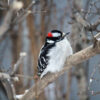
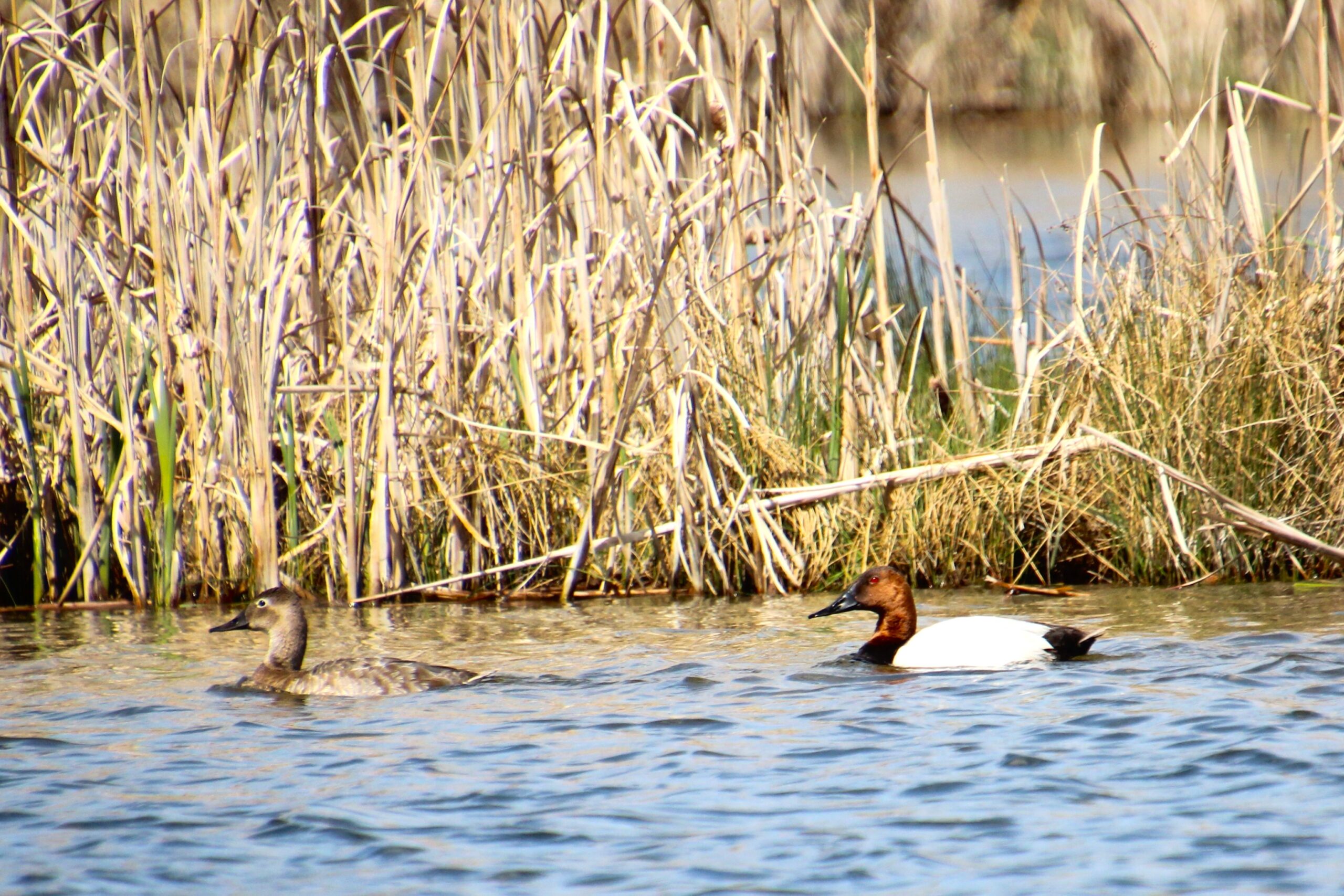
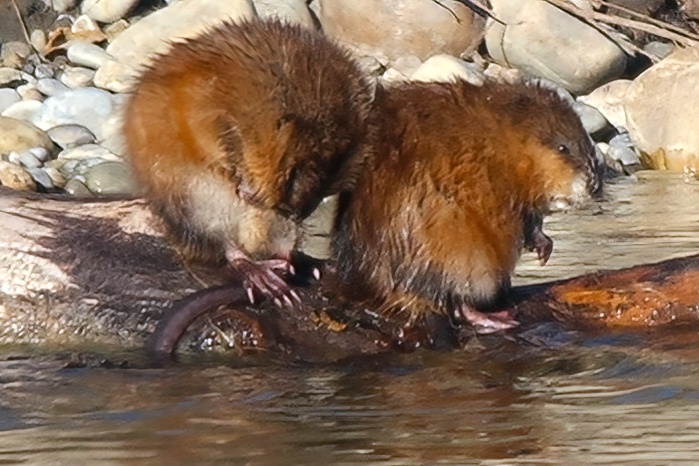
Generally speaking, natural wetlands provide life’s necessaries for a greater diversity of wildfowl, birds, insects, amphibians such as frogs and salamanders, as well as mammals like deer, coyotes, foxes and muskrats. Storm ponds can attract geese, mallards and at times, great blue herons. If there is enough physical distance between human beings and wildlife with ideal vegetation available, specific bird species like yellow-headed blackbirds, red-winged blackbirds, common yellow-throats and marsh wrens make nests and reproduce.
Wondering about the health of Chestermere’s wetlands, Elaine and I have explored a number of the engineered storm ponds but found natural wetlands scarce. In a 2012 wetland inventory done in Chestermere, 275 wetland areas, covering 324 hectares were identified. 196 of these wetlands were low-prairie or wet meadows, drying out over the year. The remainder, 79, were described as shallow marshes (temporary), deep marshes (semi-permanent), permanent or alkali (salt-tolerant). Wetland flood control and carbon storage values were converted to 2012 dollars, totaling $11 million. Nature itself, including vegetation and other life forms were not included in any lation.
A few weeks ago, a fellow citizen expressed concern about a still existing natural wetland within city boundaries. Developers have an eye on the wetland and surrounding hectares for development. Can one citizen save a natural wetland? Learn more in next week’s column.
Saving Space for Nature?: Part One Wetlands or Storm Ponds?
In response to Canada's Online News Act and Meta (Facebook and Instagram) removing access to Canada's local news from their platforms, Anchor Media Inc encourages you to get your news directly from your trusted source by bookmarking this site and downloading the Rogue Radio App. Send your news tips, story ideas, pictures, and videos to info@anchormedia.ca.
You may also like
About the author
Elaine and Don Cassidy



 BLANKET CLASSIFIEDS – Alberta-Wide Weekly Classified Ads
- Easy Calving Angus Hybrid Bulls85 red and black easy calving yearling bulls on test (65-85 pound BW). Less than 1% assist rate in over 33,000 home-raised and commercial heifers. Six month breeding soundness guarantee An easy calving, stress-free spring is just an email away! CharltonCattleCo@gmail.com | www.CharltonCattleCo.ca50 years’ experience raising only easy calving bulls for first calf heifers. […]
- KofC Dream Vacation RaffleTHINKING OF YOUR DREAM VACATION? How about the Knights of Columbus Airdrie Dream Vacation Raffle. BUY YOUR TICKET TODAY! at airdriedreamvacation.ca Ad Category: Recreation and Travel, Services
- WANTED: COIN COLLECTIONS. PAYING CASH!Cash for CoinsWANTED Royal Canadian Mint coins, Franklin Mint, US Mint, world sets etc , collector ’s coins,numismatics , Olympic coins, old coins, old $, gold coins, silver coins, bars, ingots , jewelry, nuggets, sterling silver & ENTIRE COIN COLLECTIONS! Call or text Todd, Numismatist/Gold & Silver Dealer 780-504-7995 Ad Category: Wanted
Add Comment