


The magic of migration, both spring and fall, brings rapturous joy to many a bird watcher. Eyes scan the skies, hopeful of spotting flocks of wildfowl heading north to engage in the necessary reproductive cycle of life and then return to their winter homes in a southerly flight. Flocks numbering in the thousands or tens of thousands, fill the sky in North America’s four major flyways. It all seems wonderful, but there is a part of the story both far from our view and over a century ago, that helps one gain perspective on these massive migrating flocks and the implications for our present times.
In the first few decades of the 20th century, Snow geese, Canada geese, Greater white-fronted geese and Tundra swans were hunted nearly to extinction. In 1900, Snow Geese numbers were about 2500. Canada Geese were considered locally extinct in some regions. Adding to declining goose populations was the near extinction of both Tundra and Trumpeter Swans, the latter numbering less than 100 in the 1930s. Conservationists and governments of the day, took action, leading to the passing of the Migratory Birds Convention Act of 1917. Actions to limit hunting and to preserve habitat in order to allow these 5 species to recover resulted in incredible success. Snow Geese number over 10,000,000, Canada Geese add another 7,000,000, Greater white-fronted total 6,000,000, Tundra Swans add 280,000 and Trumpeter Swans number over 63,000. Working together, Canada and the United States have achieved incredible success. There couldn’t possibly be tears shed by bird watchers now could there?
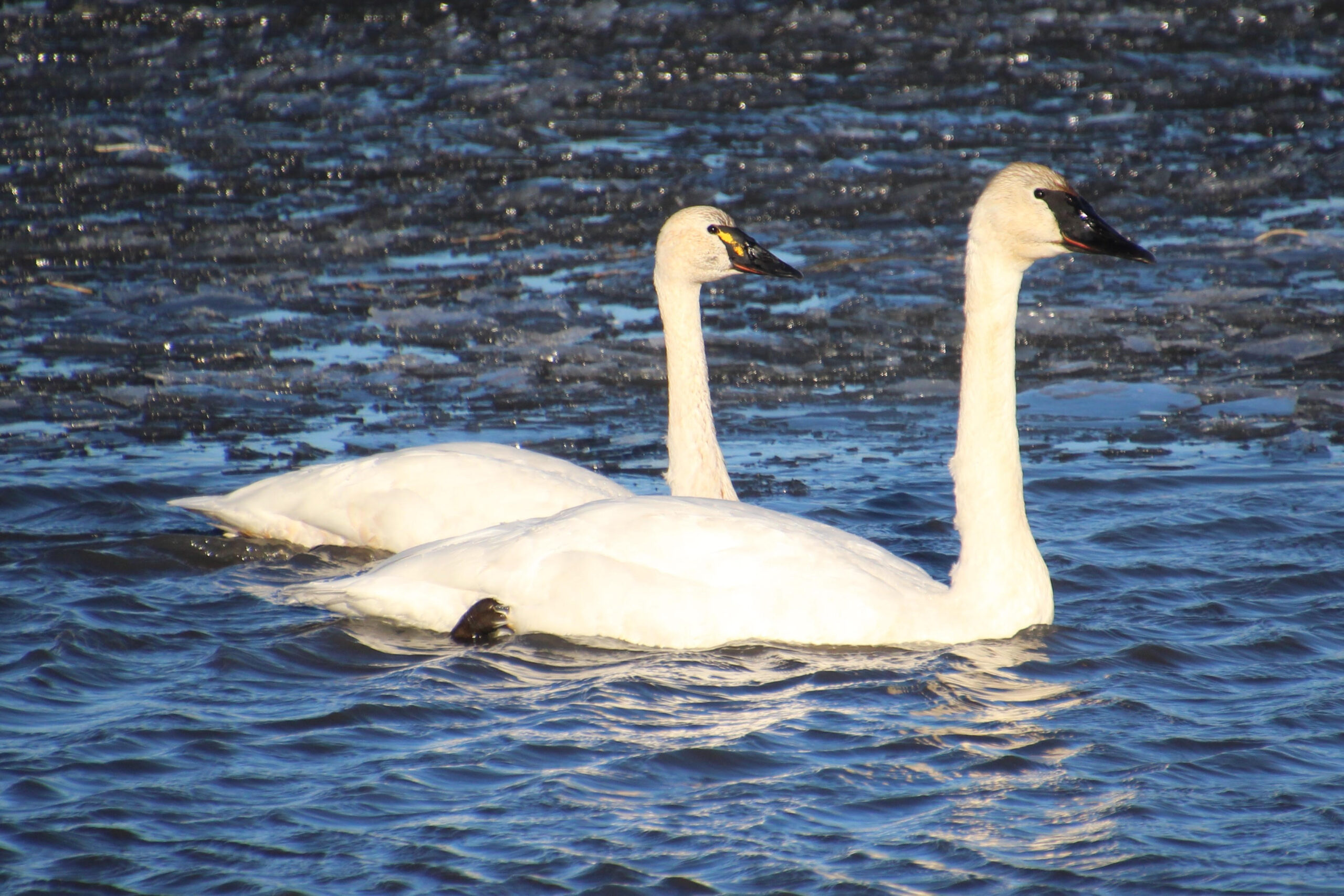
Every two years the federal government provides an opportunity for all provinces and territories in Canada to put forward migratory bird hunting regulation proposals. Bird populations are taken into account, and factors such as declining habitat availability in the far north are considered before changes are proposed. A new proposal that caught our attention is to create a Tundra Swan hunt in Manitoba, Saskatchewan and Alberta. Southern Alberta is a major migratory stopover route for the majority of the Western swan population serving both migration times. Currently the western Tundra swan population is about 82,500. The population management plan is to have 3-year average of 60,000 Tundra swans. Tundra swans have been harvested in some American states since 1962, including Utah, Nevada, Montana, Alaska and Idaho. Research evidence indicates hunting continues to be sustainable, using limited draws to hunt. The daily swan limit is 1, with an annual limit of 3 in the states. Alberta’s proposal is to issue 500 permits, allowing permit holders to have a daily bag limit of 1 swan, with a possession limit of 1. The average success hunting rate has been estimated at 37%, which converts to 185 Tundra swans to be harvested. The main season would start on September 1st and close on December 16th. Reasons for opening such a hunt is to expand hunting opportunities and add additional marketing opportunities for outfitting businesses.
A major concern expressed by conservationists and bird watchers would be the accidental shooting of Trumpeter Swans. Trumpeter kill rates in the United States are very low. Being considered in Alberta is the requirement of hunters to send in photographs within 24 hours of a harvest in order to determine the incidental take of Trumpeter Swans.
Are we creating a population swan song or will hunting have a minor impact on Tundra swans?
A Case for Hunting Tundra Swans?
In response to Canada's Online News Act and Meta (Facebook and Instagram) removing access to Canada's local news from their platforms, Anchor Media Inc encourages you to get your news directly from your trusted source by bookmarking this site and downloading the Rogue Radio App. Send your news tips, story ideas, pictures, and videos to info@anchormedia.ca.
You may also like

About the author
Elaine and Don Cassidy



 BLANKET CLASSIFIEDS – Alberta-Wide Weekly Classified Ads
- EDMONTON COIN SHOW – April 11&12EDMONTON COIN SHOW – April 11 &12, 2026. Saturday 10 am – 4:30 pm; Sunday 10 am – 3 pm. Lions Centre 11113 – 113 Street, Edmonton. Family friendly! Displays * Auctions * Free market evaluations. * Dealers from across Canada. * See www.edmontoncoinclub.com/shows.
- FIREARMS AUCTIONS – Consign nowFIREARMS AUCTIONS: Ward’s and Bud Haynes Auctions in Edmonton. Consign Now! Firearms, Ammo, Optics, Accessories, etc. Call Brad Ward, 780-940-8378. FirearmsAuction.ca. Ad Category: Auctions
- BARLEY, WHEAT, PEAS, OATSBARLEY – NEW-AB Standswell Smooth AWN, High Yielding, Grain and Forage Great Lodging Resistance. 1st NITROGEN USE EFFICIENT CEREAL IN CANADA. OTHER BARLEY: Cerveza, CDC Austenson, CDC Durango, CDC Maverick, Esma, Sundre. WHEAT – Pintail, Forage or Grain. OATS – AC Juniper, AC Morgan, AC Mustang, Derby, CDC S01 Super Oat. PEAS – Very Early […]