


A renewed push by Alberta’s government to revisit provincial electoral boundaries is drawing both support and scrutiny, as questions emerge over how and when changes should be made ahead of the next general election in 2027.
Premier Danielle Smith and her United Conservative Party (UCP) caucus are preparing to introduce a motion in the legislature to re-examine a recent electoral boundaries commission report. The stated goal is to ensure Alberta’s electoral map reflects continued population growth, particularly in fast-expanding regions.
If approved, the motion would establish a new panel of Members of the Legislative Assembly (MLAs), with a majority drawn from the governing caucus, to oversee potential adjustments. The move comes after an earlier independent review recommended increasing the number of provincial ridings from 87 to 91, rather than significantly redrawing existing boundaries.
Electoral boundary reviews are a standard part of democratic systems, typically conducted to maintain fair representation as populations shift. In Alberta, commissions are generally structured to operate at arm’s length from government, balancing input from multiple parties and guided by principles such as population equality, community cohesion, and geographic considerations.
However, the latest proposal has sparked debate over whether the process risks becoming more politically influenced than in previous reviews.
The Opposition Alberta New Democratic Party has raised concerns about both the timing and structure of the proposed panel. Party representatives argue that allowing a government-majority committee to revisit the boundaries process could open the door to partisan decision-making, potentially shaping electoral districts in ways that favour the governing party.
Government officials, for their part, maintain that the review is a practical response to Alberta’s rapid growth. Communities on the outskirts of major urban centres — including areas near Chestermere — have seen significant population increases in recent years, placing pressure on existing electoral boundaries to adequately reflect representation.
The issue is not without precedent. Across Canada, electoral boundaries are periodically adjusted to account for demographic change, with independent commissions typically making recommendations that are then reviewed by legislatures. The balance between independence and legislative oversight has long been a point of discussion.
The chair of the most recent Alberta commission has reportedly cautioned against what was described as a “radical” redrawing of boundaries, instead recommending a measured approach that prioritizes adding seats over reshaping districts. That recommendation reflects a broader principle often applied in redistribution processes: maintaining stability where possible while addressing imbalances.
At the same time, the debate highlights a recurring tension in electoral reform — how to ensure fairness while maintaining public confidence in the process. Even when changes are justified by population shifts, the perception of political influence can affect how those changes are received.
For residents in growing communities like Chestermere, the outcome of any redistribution could influence how effectively local concerns are represented at the provincial level. Larger populations within a single riding can lead to increased demands on elected representatives, while boundary adjustments may alter which communities are grouped together.
As the proposal moves through the legislature, it is expected to prompt further discussion not only about the mechanics of redistribution, but also about transparency and public trust.
Ultimately, the question facing Alberta lawmakers is not whether electoral boundaries should evolve — they must, as populations change — but how that evolution is managed. The process itself, as much as the outcome, will likely shape public perception in the months and years leading up to the next provincial vote.
Debate Rekindled Over Alberta Electoral Boundaries
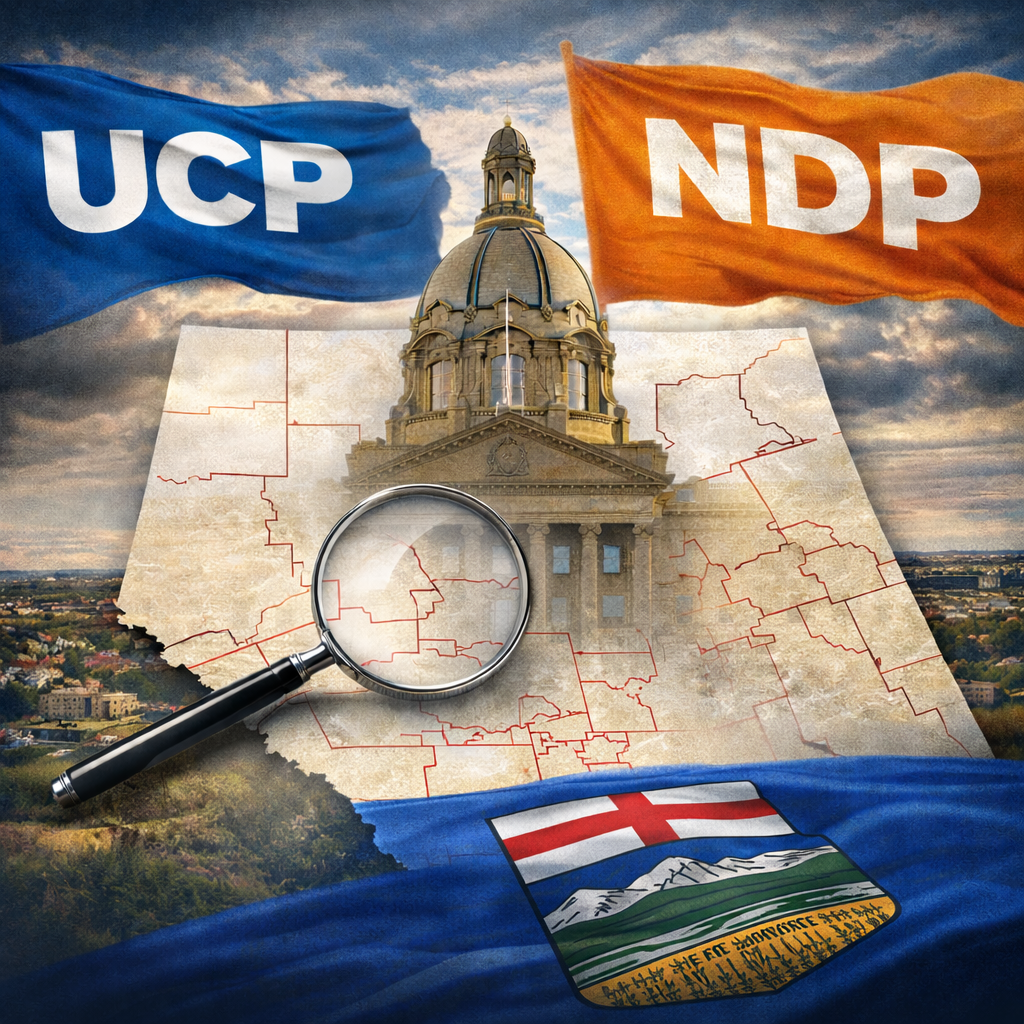
Government cites population growth as Opposition raises concerns about timing and process
In response to Canada's Online News Act and Meta (Facebook and Instagram) removing access to Canada's local news from their platforms, Anchor Media Inc encourages you to get your news directly from your trusted source by bookmarking this site and downloading the Rogue Radio App. Send your news tips, story ideas, pictures, and videos to info@anchormedia.ca.
You may also like

About the author

Staff Writer
In response to Canada's Online News Act and Meta (Facebook and Instagram) removing access to local news from their platforms, Anchor Media Inc encourages you to get your news directly from your trusted source by bookmarking this site and downloading the Rogue Radio App. Send your news tips, story ideas, pictures, and videos to info@anchormedia.ca

 BLANKET CLASSIFIEDS – Alberta-Wide Weekly Classified Ads
- ROCKY MOUNTAIN EQUIPMENT IS HIRINGROCKY MOUNTAIN EQUIPMENT IS HIRING: Parts Technicians, Agriculture & Heavy Equipment Techs - Journeyman, Apprentices, CVIP/Truck Techs, Shop and Field positions available. View Open Roles www.rockymtn.com/careers. Possible Relocation and Signing Bonus Offered. Ad Category: Employment Opportunities
- We buy all Mint sets, Gold Jewelry and moreCANADIAN PICKERS! Downsizing? Moving? Buying Silver Flatware & Jewelry. We buy all Mint sets, Gold Jewelry, Rings, Chains, etc. Ted or Joy 825-966-4373. Ad Category: Wanted
- Seeking applications for Medical Appeal PanelTHE MINISTER OF ASSISTED LIVING and Social Services is seeking applications from individuals interested in serving as members for the Medical Appeal Panel. Visit: https://public-agency-list.alberta.ca/ search for medical appeal panel. Ad Category: announcements